May 30th, 2025| Teckna Group

Posted On 26th Feb, 2026 | Posted By Teckna Group
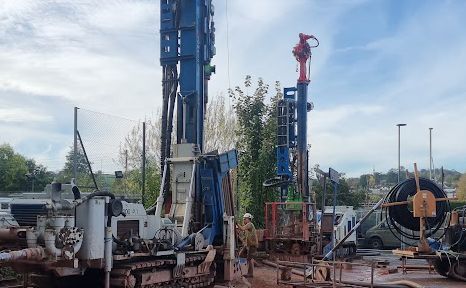
Geothermal drilling is an exciting and often highly effective way of tapping into sustainable energy sources. While it’s commonly referred to in domestic contexts with relatively small-scale ground source heat pumps, geothermal drilling can also be used on a commercial scale for larger projects.
As these projects scale up, there are a few more restrictions on where these kinds of drilling projects can take place. Below, we explore some of the main factors involved in choosing a suitable site, from finding areas with higher levels of natural heat to seeking planning permission.
One of the ways in which commercial and other large-scale geothermal drilling projects have been optimised in recent years is by tapping into existing areas with higher levels of heat.
For example, areas with high concentrations of granite tend to see higher temperatures, up to around 200°C at 5km. By using different methods of extraction, including geothermal drilling projects, it is possible to extract this energy and either use it for heating projects or to produce electricity.
These kinds of projects are being implemented in Cornwall and the north of England, where higher concentrations of the right kind of granite can be found.
Outside of these high-energy areas, it’s still possible to drill deeper holes to tap into the energy stored in the earth’s crust. This entails drilling much deeper holes than with domestic ground source heat pumps, to provide an amount of energy that can cater to entire housing developments or hospitals, for example.
In some cases, it can be possible to repurpose existing wells to tap into the earth’s heat. These wells, which may have originally been drilled to extract oil, gas or for a range of other purposes, can massively reduce the costs associated with deeper, commercial geothermal energy extraction projects.
These kinds of projects are less reliant on identifying a deep aquifer with particularly high levels of heat, and can be used anywhere in the UK. They’re often far bigger infrastructural investments, with the Eden Project for example costing around £20 million.
In addition to identifying sites where it would practically be possible to drill and extract heat or other sources of energy, commercial geothermal drilling projects are also subject to a range of different local and national regulations.
Planning permission will typically need to be sought from local authorities, the Environment Agency, and any landowners who may be stakeholders in the project. In addition, the project will need to comply with a range of health and safety guidelines, along with other management protocols such as those related to seismicity management.
Planning a commercial geothermal drilling project involves juggling a number of complex, interrelated variables, and it’s critical that you get it right the first time around. Done correctly, these kinds of energy investments can provide commercial enterprises with cheap, sustainable energy for decades to come, and it’s important to plan and manage the project in a way that maximises its chances of long-term success.
Posted On 26th Feb, 2026 | Posted By Teckna Group


Please provide as much information as possible below, and our team will be in touch.
For urgent enquiries, call our head office.
Saddle Hill Farm, 277 Preston Road, Standish, WN6 0NZ

Please provide as much information as possible below, and our team will be in touch.
For urgent enquiries, call our head office.