Jan 06th, 2026| Teckna Group

Posted On 29th Jun, 2026 | Posted By Teckna Group
Geothermal energy has become an increasingly dominant energy solution in recent years. In a context where we are faced with spiralling gas prices and a prerogative to reduce carbon emissions, these highly efficient ways of producing heat energy for both domestic and commercial properties are simply too good to overlook.
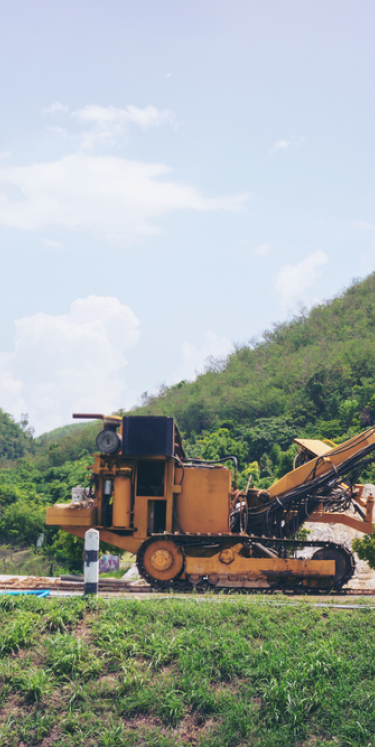
Drilling lies at the logistical heart of these projects, and as a result, technological innovation in this area is paramount to making geothermal energy projects more widely viable.
In many geothermal projects, the costs associated with borehole drilling can represent a substantial portion of overall costs. This has resulted in a lot of otherwise viable sites and projects becoming economically unviable; in 2026, there is a big drive to bring drilling costs down, focusing on drilling time reduction and optimising technologies to drill through hard rock formations.
A number of innovations are being made in the actual drills that are being used to drill geothermal boreholes. Hybrid systems, for example, use two or more drilling mechanisms to improve drilling performance through hard rock formations, while other innovations are being made that improve rotary bit design, resulting in a substantial positive impact on efficiency and speed.
As with every other area, we’re also seeing a number of uses of AI in geothermal drilling. Automated systems make it much easier to collect and interpret drilling-related data, often in real time, making it easier to plan and assess projects.
Other AI-powered tools are having an immense positive impact on well prediction, based on data gathered from existing maps and site-specific surveys. The result is that engineers can make much more accurate decisions surrounding borehole planning and execution, saving both time and money.
One of the core challenges associated with geothermal borehole drilling and drilling more generally has long been thermal resistance. The friction associated with the drilling process itself produces enormous amounts of heat, which destroys bits and places a limit on drilling speeds.
We’re seeing a number of innovations in both heat-resistant materials and cooling systems, both of which stand to substantially improve the geothermal drilling landscape more generally.
Perhaps the most exciting development has been the use in recent years of millimetre-wave (MMW) drilling technologies to replace mechanical bits.
These systems use heat to essentially melt rock, instead of crushing it, which opens up a whole new area of deep, superhot geothermal energy projects.
This type of drilling isn’t relevant to domestic or even commercial-scale geothermal projects, but it is exciting nonetheless. In the years to come, we can hopefully expect to see it used on a much larger scale to produce energy for entire towns and cities.
Geothermal drilling technology is currently experiencing a number of breakthroughs, all of which should continue to bring down the price and inconvenience of completing a geothermal borehole drilling project. It’s absolutely worth keeping an eye on these developments, to see whether they might render a previously unviable project in your area feasible.
Posted On 29th Jun, 2026 | Posted By Teckna Group


Please provide as much information as possible below, and our team will be in touch.
For urgent enquiries, call our head office.
Saddle Hill Farm, 277 Preston Road, Standish, WN6 0NZ

Please provide as much information as possible below, and our team will be in touch.
For urgent enquiries, call our head office.