Nov 09th, 2018| Teckna Group

Posted On 01st Sep, 2025 | Posted By Teckna Group
A usually reliable borehole rarely fails without warning. Performance will almost always start to dip in the months before failure: a little grit in the pre-filter that slows things down, a pump that sounds like it’s not quite managing, maybe a metallic taste after heavy rain.
If you’re able to spot those early signs and keep to a regular maintenance routine, the supply should stay clean and predictable. Here, we’ve put together a practical guide to water borehole maintenance, to keep your set-up running reliably for as long as possible.
Most set-ups are pretty similar. Below ground sits a screened casing, held in place by a grout seal. At the surface, there’s a raised wellhead with a sanitary cap and vent. From that headworks, the rising main delivers water into a pressure system – usually a vessel controlled by a gauge and pressure switch – before treatment and storage.
Treatment often starts with the bigger parts (sediment removal), may include iron/manganese media or pH correction, and almost always ends with UV disinfection ahead of a tank that feeds distribution pipework. What all the bits in between the water source and the tap look like will depend on the ground source you’re drawing the water from, the impurities contained in that water, and the end purpose that you’ll be using the water for.
Spend half an hour tracing that system, either in person or by looking at the system diagram. Identify which valves isolate which sections, the direction of flow, and where test points exist. Note the normal pressure when a tap is open and how the pump sounds under load – once “normal” is clear in your notebook, deviations from that range are a lot easier to spot.
Once a week, open a tap and keep an eye on the gauge through one pump cycle. A crisp cut-in and cut-out suggests the vessel and switch are functioning healthily; a broad, wandering swing points to a flat pre-charge, or maybe to a failing switch.
These aren’t really distinct ‘checks’ that you need to do – they’re just issues to be cognisant of while operating the water system as normal.
Another quick check you can do is to stand by the control panel for a minute and have a listen. Relays shouldn’t make any sounds at all, and neither should the motors; new vibrations might not signal disaster quite yet, but they can be a warning of faulty bearings or imminent pump failure. Water colour clues are also informative: orange or brown stains could mean that there’s excessive iron, black specks hint at manganese, and a faint egg smell could be a sign of the presence of sulphides.
If any of these brief observations suggest that something could be wrong, then it’ll be time to get an engineer in to check what might need to be done to fix it.
Sediment cartridges do a lot of heavy lifting with keeping borehole water supplies clean, so don’t wait for the flow to crawl to a stop before you empty or replace them. Watch the pressure, and change them before it gets too much.
If you use UV, isolate the power, wipe the quartz sleeve clean, and confirm that the alarm is behaving as intended – UV is a line-of-sight kind of tool, and clarity can actually matter more than lamp brightness. It won’t take long to clean the surface of the sleeve or any other screens, and it can have a big impact on water purity.
With the system de-pressurised, check the pressure vessel’s air pre-charge. Most vessels want a setting roughly one to two bars below the pump’s cut-in; a small correction here early on prevents annoying short-cycling later.
Do a slightly more in-depth performance check every few months. Fully open an outlet for five minutes and log the flow; compare it with your previous entry.
If you’re able to monitor drawdown, record that too. Falling yield with deeper drawdown could be a sign of a fouled screen or pump wear. If you’re unable to monitor these kinds of metrics, then you might want to consider installing a recording device. It’s important to know what’s going on with your water borehole, and given how inaccessible the water table is, you’ll need all the clever gadgets you can get your hands on to get some real, data-driven insights.
Inspect any storage locations properly as well. Open the lid on the tank, look for things like blocked screened vents and evidence of insect ingress, and make sure that the internal surfaces are clean.
At least once a year, verify that the treatment processes you’re using work as expected. Use a UKAS-accredited laboratory and sample both raw water (before treatment) and treated water so you know which stage is doing what.
A sensible test will include E. coli and coliforms, pH, conductivity, turbidity, iron, manganese, hardness, and nitrate. E. coli should be completely absent in 100 mL samples. Persistent microbiological failures usually trace back to headworks hygiene, storage contamination, high turbidity compromising UV, or a lamp at the end of its life.
On the electric side of things, record the pump’s running current and compare it with the correct figures; rising amps often accompany mechanical wear or fouling. Check insulation resistance, and confirm cut-in and cut-out pressures.
Replace drifting pressure switches rather than living with intermittent trips – they waste time and can also mask real faults.
At the wellhead, make sure the sanitary cap seals properly, the vent is screened, cable glands are tight, and the concrete apron sheds rain away from the casing. It only takes the tiniest of gaps for bacteria to get in and ruin all your hard work.
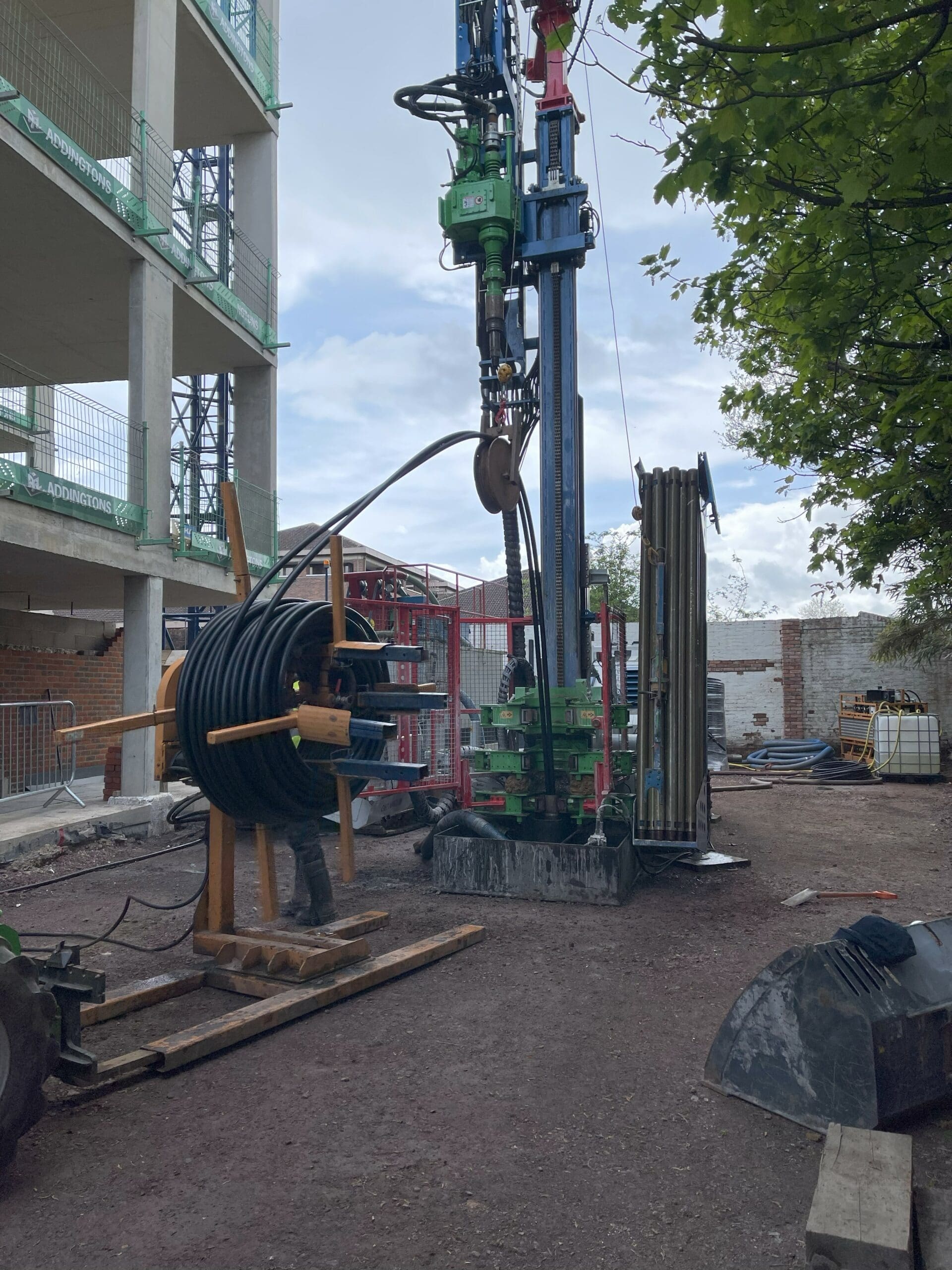
Even well-run systems lose specific capacity over time. If the flow per metre of drawdown falls, and then stays low, schedule a rehabilitation by a professional engineer before winter.
Available methods include chemical cleaning to dissolve mineral scale, and air-lift or surging techniques to strip the system of biofouling; the right choice depends on geology and screen design.
While the rig is on site, you may also want to consider replacing the rising main and non-return valves. They’re technically consumables so you’ll need to replace them at some point anyway, and planned swaps are cheaper – and safer – than recovering a failed assembly at a time chosen by chance rather than set by you.
Most “sudden” contamination starts at the top, with an unexpected ingress of surface water. The wellhead should stand proud of ground level, on an apron that falls away to shed rain; a sealed sanitary cap and a screened vent are also both essential.
Replace perished grommets at set intervals, cracked conduit, and improvised cable holes regularly; they pull insects, dust and water into places they don’t belong. Keep foul drains, septic fields and fuel stores at sensible distances that reflect local geology and comply with the relevant regulations.
Borehole maintenance is an ongoing task that needs to be taken seriously. Keep surface water out, treatment barriers clean and verified, watch trends while placing them in their context, and act on slow declines before they become a more serious failure. A brief weekly and monthly observation schedule, a quarterly performance check and one thorough annual service will keep most systems dependable, consistently delivering safe water without too much cost.
Posted On 01st Sep, 2025 | Posted By Teckna Group




Please provide as much information as possible below, and our team will be in touch.
For urgent enquiries, call our head office.
Saddle Hill Farm, 277 Preston Road, Standish, WN6 0NZ

Please provide as much information as possible below, and our team will be in touch.
For urgent enquiries, call our head office.